Discoveries
Things you might not know about May Day
A maypole that stands all winter, two hobby horses in a Cornish port, a dance that starts at seven, and a bank holiday that once fell on a Friday.
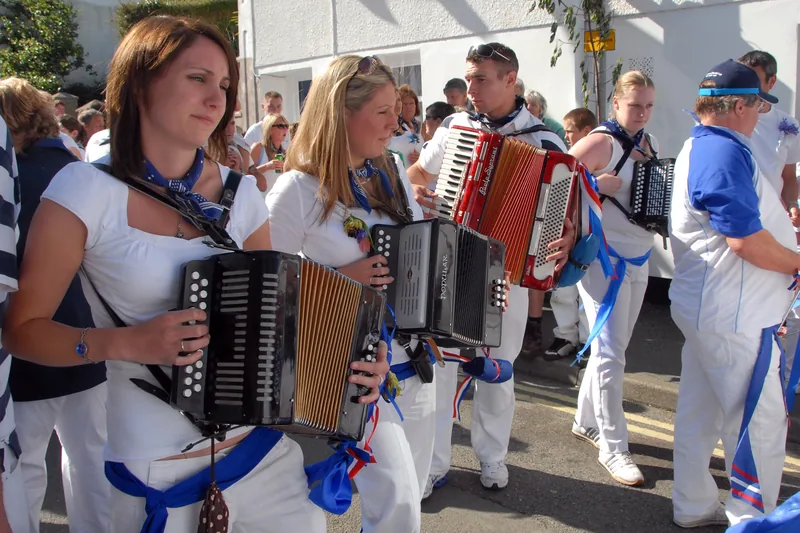
GOV.UK does not call it May Day
The official bank-holidays page never uses the words “May Day” or “Mayday.” The early-May holiday is labelled “Early May bank holiday” in the England and Wales, Scotland, and Northern Ireland tables. [source]
The English holiday dates from 1978
The National Trust says “the May Day Bank Holiday was instituted by Michael Foot, then the Labour Employment Secretary, in 1978.” [source]
In 2020 it was a Friday
GOV.UK records Friday 8 May 2020 as the Early May bank holiday, marked “(VE day).” [source]
The 1971 Act already listed an early May Monday — for Scotland
Schedule 1 includes “The first Monday in May” in the Scotland list. The England and Wales list in the same schedule does not. [source]
A proclamation can appoint the day without naming it
The Gazette notice of 11 July 2025 appointed Monday 4 May 2026 as a bank holiday in England, Wales and Northern Ireland. It does not call that Monday May Day, and it does not appoint a Scottish holiday. [source]
Two Oss come out in Padstow every 1 May
The organisers say that “each and every 1st of May, the Old Oss and Blue Ribbon Oss are let loose from their stables to roam around Padstow,” a tradition “that has taken place for centuries.” [source]
Helston’s Flora Day is usually 8 May
Not the first. A bass drum starts the dance at seven in the morning. Couples go through houses and shops “to drive out the darkness of winter and bring in the light of spring.” [source]
The Hal an Tow sings of the Armada
Helston’s official site says the pageant’s characters sing about the Spanish Armada, St George, and “the fight between St. Michael and the devil.” [source]
Maypole ribbons were first recorded in mid-14th-century Wales
That is the National Trust’s wording. The Trust calls the maypole “the quintessential image of May Day.” [source]
Ickwell keeps a maypole up in February
Robin Hall photographed it on 11 February 2006. The Geograph description says “large, sturdy and apparently permanent.” [source]
Milkmaids once danced under towers of silverware
The National Trust records milkmaids dancing for pennies “while balancing towers of borrowed silverware on their heads,” and chimney sweeps in “gaudy clothes” hustling for coins. [source]
Maypoles went back up in 1660
After “the most comprehensive campaign against May Day” in Cromwell’s Commonwealth, the Trust says, maypoles were raised at the Restoration “as a gleeful marker of the end of Puritan prohibitions.” [source]
In Wales the day is Calan Mai, or Calan Haf
The National Trust says those customs “never died out.” [source]
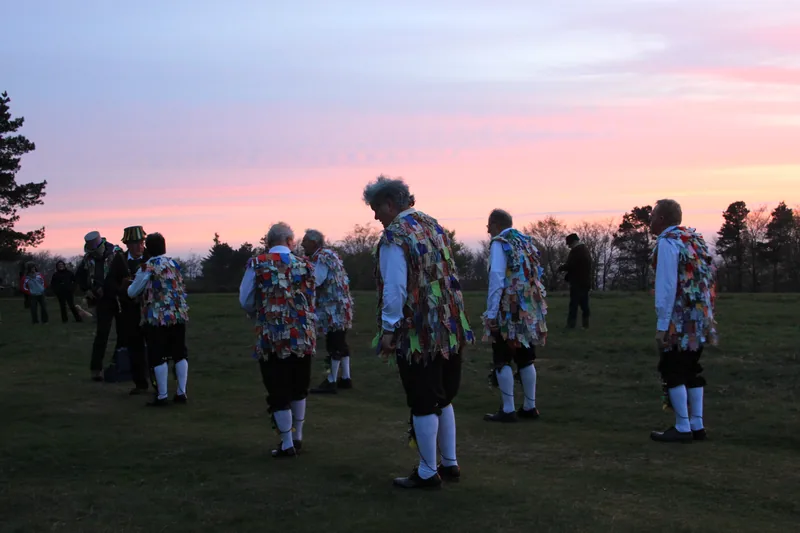
Morris dancers have waited for the May Day sunrise
Roger Davies photographed the Forest of Dean Morris Dancers doing exactly that on 1 May 2015. [source]
Taken together, these stories share a month and not always a morning. Padstow comes out on the first of May, Helston usually on the 8th, and the official holiday on a nearby Monday — or, in 2020, on a Friday. A Welsh maypole record, a Bedfordshire pole that stands in February, and a Forest of Dean sunrise are all part of the same season. The official pages do not ask you to flatten them into one event. [source] [source] [source]
Keep exploring
Enjoyed May Day?
No pop-ups. No intrusive advertising. Just interesting stuff. A little support helps the next traditions site get built.